
As the digital economy intensifies, the landscape of web application development is undergoing rapid transformation driven by AI, automation, and cloud-native paradigms. For CTOs, it's no longer sufficient to react to change—strategic foresight and technical fluency are now essential for steering innovation and delivering resilient, scalable solutions.
Below is an analysis of pivotal tools and trends that are shaping the future of web application development, with deeper insights into their technical underpinnings and strategic implications.
Tabnine– Context-Aware AI Code Assistant
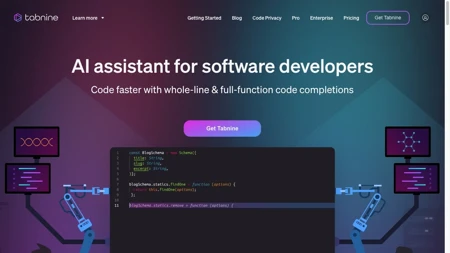
Tabnine employs GPT-based large language models (LLMs) trained on permissively licensed open-source repositories to deliver real-time, context-aware code completions within popular IDEs like VS Code and IntelliJ. Unlike simpler autocomplete tools, Tabnine leverages static and dynamic code analysis to predict entire code blocks, adapting to team-specific coding styles.
This substantially reduces developer cognitive load on repetitive patterns, allowing teams to focus engineering capacity on business-critical logic. In enterprise settings, Tabnine can be self-hosted to meet regulatory requirements while enhancing developer productivity across large codebases.
In-House Benefits:
Mutable AI – AI-Augmented Software Development
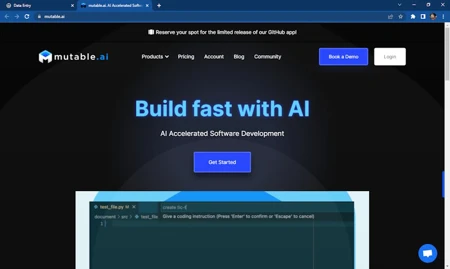
Mutable AI goes beyond mere code generation by integrating capabilities such as automated code refactoring, semantic search, and technical debt reduction. Using program analysis techniques such as abstract syntax tree (AST) traversal and data flow analysis, it can propose optimizations and enforce style consistency at scale.
This is especially valuable for teams practicing continuous integration (CI) with large monorepos, where enforcing quality and consistency manually becomes untenable. Its capacity to auto-generate documentation and improve test coverage aligns well with shift-left testing and DevOps practices.
In-House Benefits:
Okta – Enterprise-Grade Identity and Access Management (IAM)
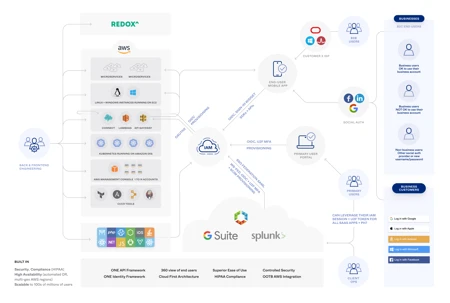
Okta provides a cloud-native IAM platform that supports SAML, OAuth2.0, and OpenID Connect (OIDC), enabling seamless identity federation across SaaS, mobile, and microservices architectures. For CTOs managing zero-trust environments, Okta facilitates policy-based access controls (PBAC) and integrates with SIEM tools for anomaly detection.
Its extensibility through APIs and lifecycle management features supports sophisticated provisioning workflows, which are crucial for large enterprises with dynamic team structures and stringent compliance mandates (e.g., HIPAA, GDPR, SOC 2).
In-House Benefits:
Terraform – Infrastructure as Code (IaC) for Multicloud Scalability
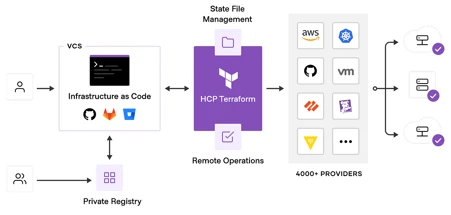
HashiCorp’s Terraform is a declarative IaC tool that abstracts cloud infrastructure management across providers (AWS, Azure, GCP). It uses a graph-based execution plan to safely apply infrastructure changes, ensuring idempotency and version control of environments.
Terraform's modular architecture and support for custom providers make it indispensable for managing immutable infrastructure and implementing GitOps practices. By integrating Terraform with CI/CD pipelines, organizations can enforce environment parity, reduce configuration drift, and accelerate deployment cycles.
In-House Benefits:
Splunk – Unified Observability and Security Analytics
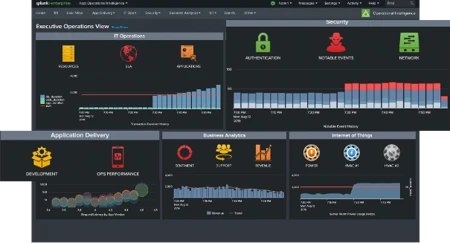
Splunk's Data-to-Everything™ platform enables full-stack observability by ingesting and correlating log, metric, and trace data. Its machine learning toolkits support anomaly detection, predictive analytics, and root-cause analysis, critical for maintaining SLOs in distributed systems. Splunk also acts as a SIEM, aggregating security events and enabling threat hunting using its Search Processing Language (SPL). For CTOs overseeing hybrid or edge environments, Splunk's real-time insights are crucial for ensuring performance resilience and compliance.
In-House Benefits:
Confluence – Collaborative Knowledge Architecture
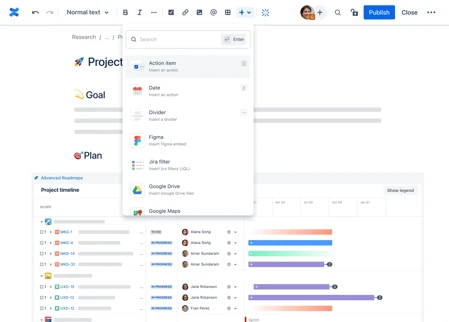
Atlassian’s Confluence serves as a structured knowledge base and collaboration hub, supporting metadata tagging, access permissions, and version history. In enterprise contexts, it can be integrated with Jira, Bitbucket, and CI/CD pipelines to support asynchronous documentation of sprint progress, incident retrospectives, and architectural decisions (via ADRs). It becomes even more powerful when enhanced with GraphQL-based APIs and integration into internal developer portals, fostering a culture of documentation-as-code and institutional knowledge retention.
In-House Benefits:
Snyk AI – Secure Development Lifecycle Automation
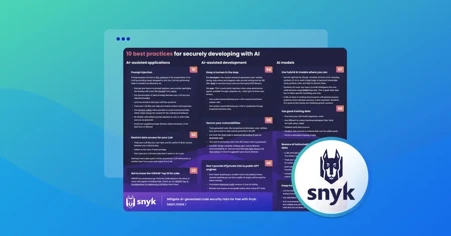
Snyk’s AI-driven platform identifies and remediates vulnerabilities across code, dependencies, containers, and Infrastructure as Code (IaC). It uses static application security testing (SAST) and software composition analysis (SCA), surfacing actionable insights within IDEs and pipelines. Its shift-left approach aligns with DevSecOps by integrating security early in the software lifecycle, ensuring that developers can fix issues without context switching. With support for popular ecosystems like Kubernetes, Terraform, and Docker, Snyk positions itself as a linchpin in securing modern SDLCs.
In-House Benefits:
Dynatrace AI – Autonomous Observability and Root-Cause Intelligence
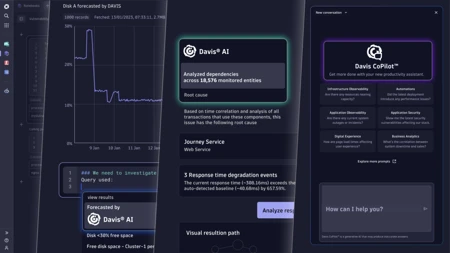
Powered by Davis®, Dynatrace’s causal AI engine, the platform provides high-fidelity observability across applications, infrastructure, and user journeys. Unlike traditional APM tools, Dynatrace employs topology-aware dependency mapping and distributed tracing, offering pinpoint accuracy in identifying performance bottlenecks. It excels in Kubernetes and serverless environments where ephemeral workloads complicate monitoring. Dynatrace integrates with ServiceNow and CI tools, making it a cornerstone for AIOps and continuous optimisation strategies.
In-House Benefits:
Global App Testing – Scalable Real-World Quality Assurance
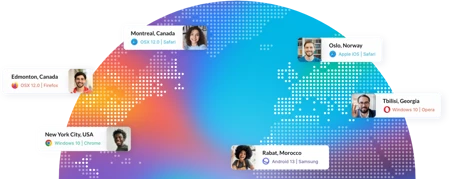
Combining automated test execution with crowd-sourced QA from a global tester network, Global App Testing enables real-world validation at scale. The platform excels in localisation, usability, and regression testing across diverse devices and conditions. For globally deployed applications, it acts as an extension of in-house QA teams, identifying critical issues that escape synthetic tests. Integration with CI/CD tools enables automated triggers based on commit status or release gates.
Shake – Frictionless Mobile Bug Reporting
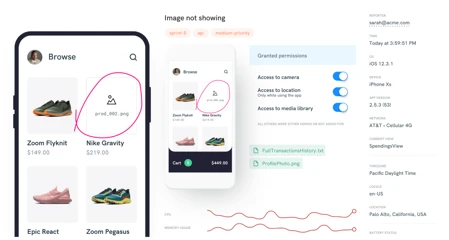
Shake provides developers with comprehensive bug reports directly from beta users by embedding SDKs into mobile apps. Upon a gesture-based trigger, it captures logs, screenshots, network traffic, and device metadata, significantly reducing bug reproduction time. With RESTful APIs and integrations with tools like Jira and Slack, Shake simplifies the triage and debugging process, improving iteration velocity in mobile-first development workflows.
In-House Benefits:
Web application development is entering an era defined by AI augmentation, cloud-native resilience, and continuous observability. CTOs who adopt a systems thinking approach—integrating tools across the DevSecOps lifecycle—will lead organisations that are not only innovative but also secure, scalable, and operationally mature.
By embracing these tools and the philosophies underpinning them—such as infrastructure immutability, shift-left security, and AI-assisted development—technical leaders can architect systems that are both agile and robust.
What tools are transforming your development stack? I’d love to hear how you're integrating these capabilities to future-proof your organisation. Reach out and share your experiences or challenges.


